
Learning to identify and regulate emotions is a big job, especially for little kids. Understanding and managing emotions are skills that are essential for students to master in order to be successful in school and in life. The Zones of Regulation approach organizes feelings into four “zones” to make them easier for kids to identify and work through. The trick is teaching students how to identify which zone they’re in and how to get back to “green.”
Jump to:
- What are the Zones of Regulation?
- How To Teach Zones of Regulation
- Zones of Regulation Activities
- Zones of Regulation Activities: Red
- Zones of Regulation Activities: Yellow
- Zones of Regulation Activities: Blue
What are the Zones of Regulation?
Leah Kuypers created the Zones of Regulation when she was an occupational therapist and noticed that the skills holding students back were centered around self-regulation, not necessarily reading and writing. Often, students were penalized for behaviors that they didn’t have the skills to deal with. “I saw the punitive approach hurting kids’ self-esteem,” she said, and kids weren’t learning skills to do anything differently.

Kuypers created the Zones of Regulation (now a digital curriculum) to teach students the various states of emotion and alertness, and to provide teachers with the tools to teach the zones in school. Now, the Zones of Regulation is used in schools and classrooms across the country and has expanded beyond Kuypers’ original special education focus. It’s created an inclusive space, she said, for all students who need help with self-regulation.
The Zones of Regulation is an instructional approach that organizes feelings, levels of alertness, and energy into zones and color-codes them:
- Blue = sad, bored, tired
- Green = focused, calm, happy, content
- Yellow = stressed, excited, giddy, worried
- Red = angry, terrified, panicked
“All zones are OK,” said Kuypers. It’s not about always being in green, it’s about matching the zone to what students want to accomplish. For example, playing a game might feel better in the yellow zone, while quiet time is a blue zone activity.
In the official curriculum, students are taught to identify their zone, how their body feels in each zone, and how to read cues to improve their emotional control, regulation, and problem-solving ability.
One consideration for teachers, says Kuypers, is how they are applying activities. The Zones of Regulation works best when teachers are incorporating the curriculum throughout the day. Use the activities below alongside the zones to support students’ self-regulation skills.
How To Teach Zones of Regulation
We asked Hanna Kemble-Mick, a school counselor in Topeka, Kansas, how she approaches the Zones of Regulation. Here are her top teaching tips:
- Emotional regulation and the Zones of Regulation are a skill. It’s not a compliance tool, says Kemble-Mick. The zones tell us information—there aren’t good or bad zones. So, students should not be punished for being in “red” or “yellow.”
- You should move from zone to zone. “The goal is not to stay in the green zone all day,” says Kemble-Mick. “The goal is to recognize what zone you are in, understand what your body is telling you, and choose a tool or strategy that helps you move toward what you need for the situation.”
- The zone is just the starting point. A student may be in yellow because they are excited or anxious, and they’ll need a different strategy depending on the actual emotion they feel. This nuance means that the more tools students have, the better they can manage their feelings.
- Ask for help. School counselors are trained and eager to help teachers implement emotional regulation strategies, says Kemble-Mick. Especially if you’re not sure where to start, teaching the zones will go better if you reach out for help.
Zones of Regulation Activities
First, students need to identify their feelings and which zone they are in. Use these activities to help students learn the language of emotional regulation and talk through situations that may make them feel angry, excited, or sad before they happen.
Do a zone check-in

One of Kuypers’ favorite activities is a zone check-in. Have a way for students to check in and let you know which zone they’re in—it could entail tapping a zone chart on their way in from gym class or having a morning meeting check-in. Students don’t have to announce their zone; they can pass. But even a pass provides information about how a student may be doing. That way, you can intervene and support students before their feelings escalate. Zones aren’t about behavior, they’re about students identifying how they feel internally and then taking steps to adjust their feelings so they are in a better place to achieve their goals.
Teach students to name the “color” they are in
First and foremost, being able to recognize emotions is important. Create or purchase a chart that shows the different Zones of Regulation with their colors and the feelings that go with each color. Students can point to or place a marker on the zone to show which zone they’re in. The more they practice, the better they’ll be at identifying their feelings.
Buy it: Zone Chart at Amazon
Pom-pom check-in
School counselor Hanna Kemble-Mick uses colored bins and pom-poms to do a quick check-in. Give each student a pom-pom as they come in, and have them drop their pom-pom into the bin that’s the color that relates to the way they feel. “This gives the teacher a quick temperature check,” says Kemble-Mick, “without putting anyone on the spot.”
For example, says Kemble-Mick, if half the class put a pom-pom in the red container after recess, you can point that out: “It looks like a lot of us are activated after recess. What happened?” This practice turns emotional regulation into a conversation rather than a behavior issue.
Play a round of feelings memory
Identifying and labeling feelings in oneself and others is a life skill that takes lots and lots of practice. Create or use a memory game to help students identify and describe feelings. Students turn over two cards that have clear “feelings” images (faces, body language, etc.). Then, they name each feeling they turn over. If they have a match, they can keep it. You can buy feelings cards, cards with emojis, or create your own using photos of students showing the feelings.
Create a bulletin board
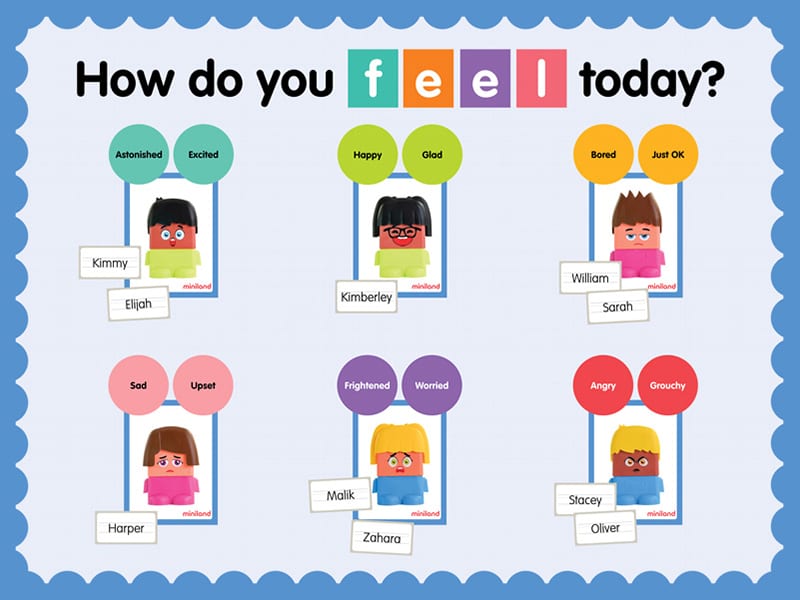
Print and laminate this bulletin board to create a display that students can update during morning meeting or whenever their feelings change.
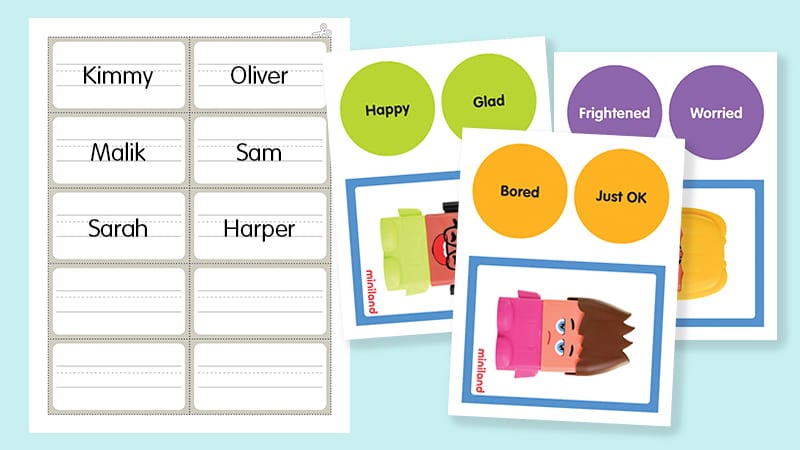
Feelings Bulletin Board
This bulletin board kit has everything you need to teach and reinforce feelings all year long.
Use board and card games
Kemble-Mick recommends using board and card games that incorporate different feelings and talking about the zones and feelings as you play. For example, assign a zone to each of the four colors in the game Sorry, and talk about the feelings as the pawns move around the board. Or play Uno and talk about the zone each color represents when the card is laid down.
Complete a dashboard gauge
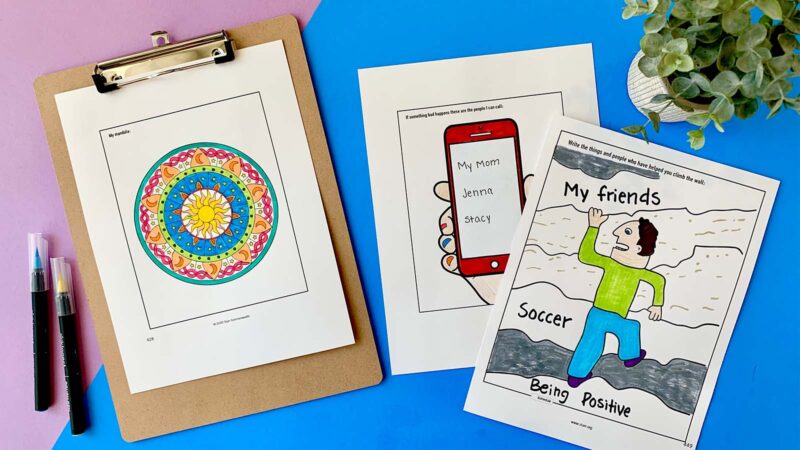
Have students fill out the dashboard gauge with a situation that makes them upset or a situation when they knew something was “wrong.” They complete the dashboard gauge with information to show how they felt and an explanation of how they calmed down and how their emotions around that situation changed.
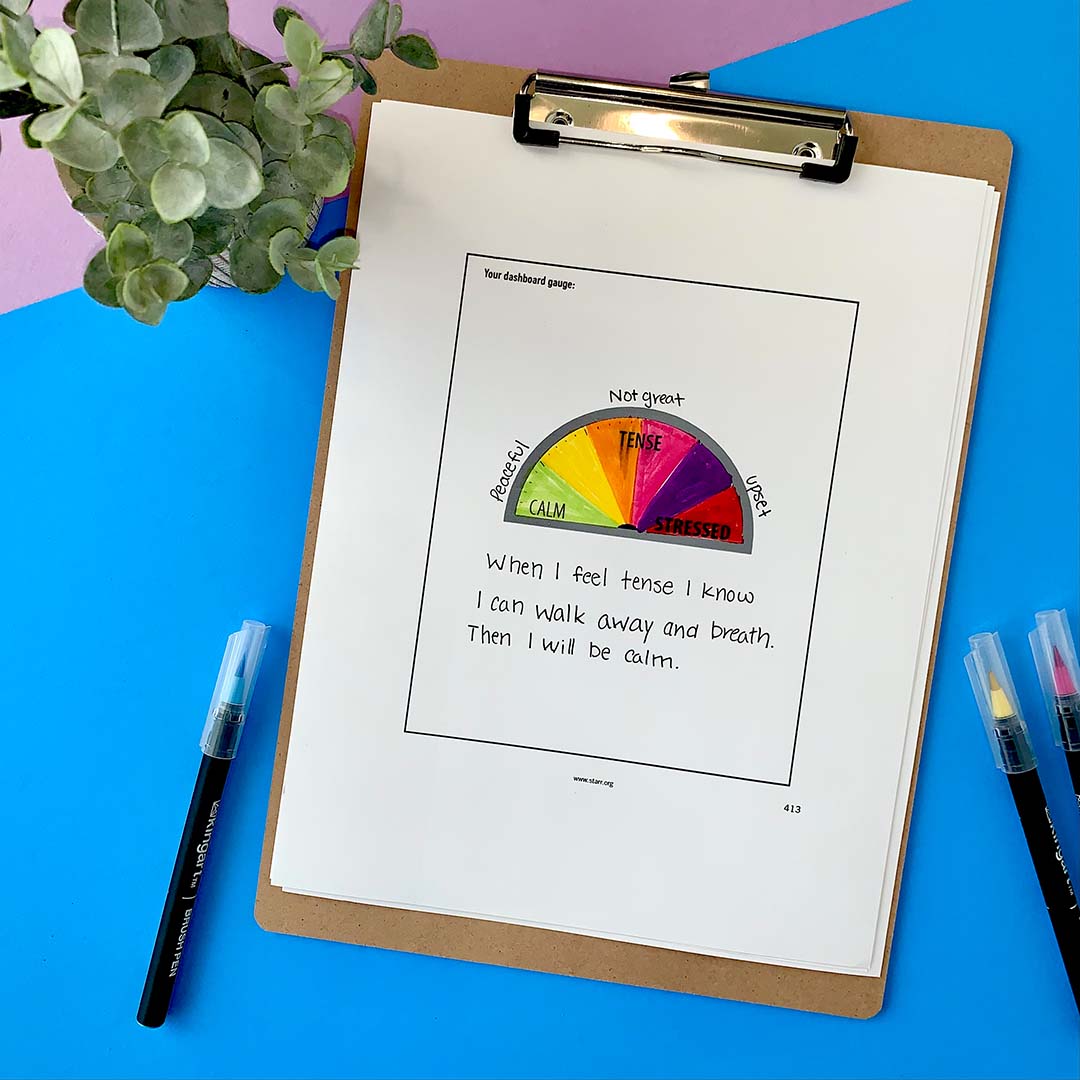
Mindfulness Activities (Free Printables)
Check out these one-minute mindfulness activities, including a gauge kids can use to rate their feelings.
LEGO check-in
Another check-in that Kemble-Mick recommends is giving students a stack of small LEGO bricks, one of each zone color. Students put the color of the zone they’re in on the top, and it can change throughout the day.
“For example,” Kemble-Mick told We Are Teachers, ”if students are working through a difficult math skill and the teacher looks around the room and notices many LEGO stacks showing yellow, that may be a sign that students are feeling stressed, frustrated, or unsure.” Then, you can pause and address it in the moment, instead of waiting until you’re grading exit tickets.
Sort emotion words
Linking Zones of Regulation activities to fun experiences helps kids make connections. Create an emotions sorting game with note cards with synonyms for the major feelings: happy, sad, excited, and angry. Students sort the words into the four zones. They’ll see how varied our feelings can be and how some feelings are similar, plus they’ll build their vocabulary.
Learn the characteristics of feelings
Use this activity to build feelings faces with a face printout and play dough and learn about the characteristics of different feelings. This is a great activity to reinforce how feelings show themselves in our bodies and actions.
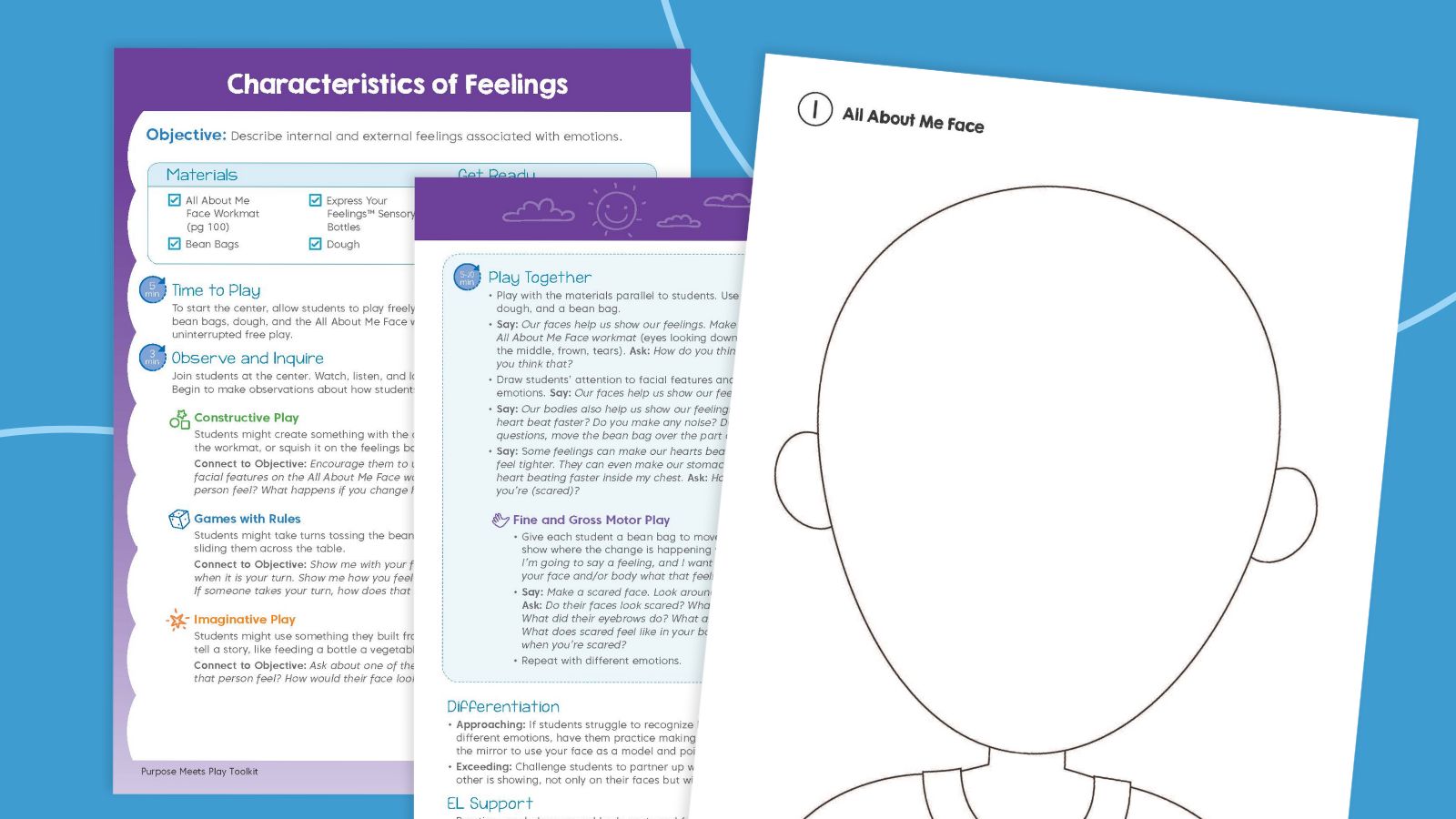
Feelings Lesson (Free Printable)
Download this feelings lesson plan and template to teach students feelings, what they look like, and how to recognize each.
Strategy sampler
In order for students to use the right strategy in the moment, they have to know what works for them. To teach them the various strategies, Kemble-Mick has students rotate through regulation stations. They can try breathing, fidgets, stretching, puzzles, and other activities that will help them move out of or into a zone.
Feelings bingo
Make bingo boards that feature feelings emojis or images (e.g., jumping around the room when we are giddy or putting our head down when we are tired). Play bingo to reinforce Zones of Regulation vocabulary and terms.
Play a feelings block game
Use a Jenga set to reinforce feelings, as in the game Breaking Barriers. When students pull a Jenga block, they answer a question about feelings and how to deal with each. Questions like:
- How do you feel when …?
- What do you do when you feel (sad, happy, etc.)?
- How do you know you are in the green/blue/red/yellow zone?
- What do you do when you are in the green/blue/red/yellow zone?
Buy it: Breaking Barriers game at Amazon
Get in the habit of naming feelings
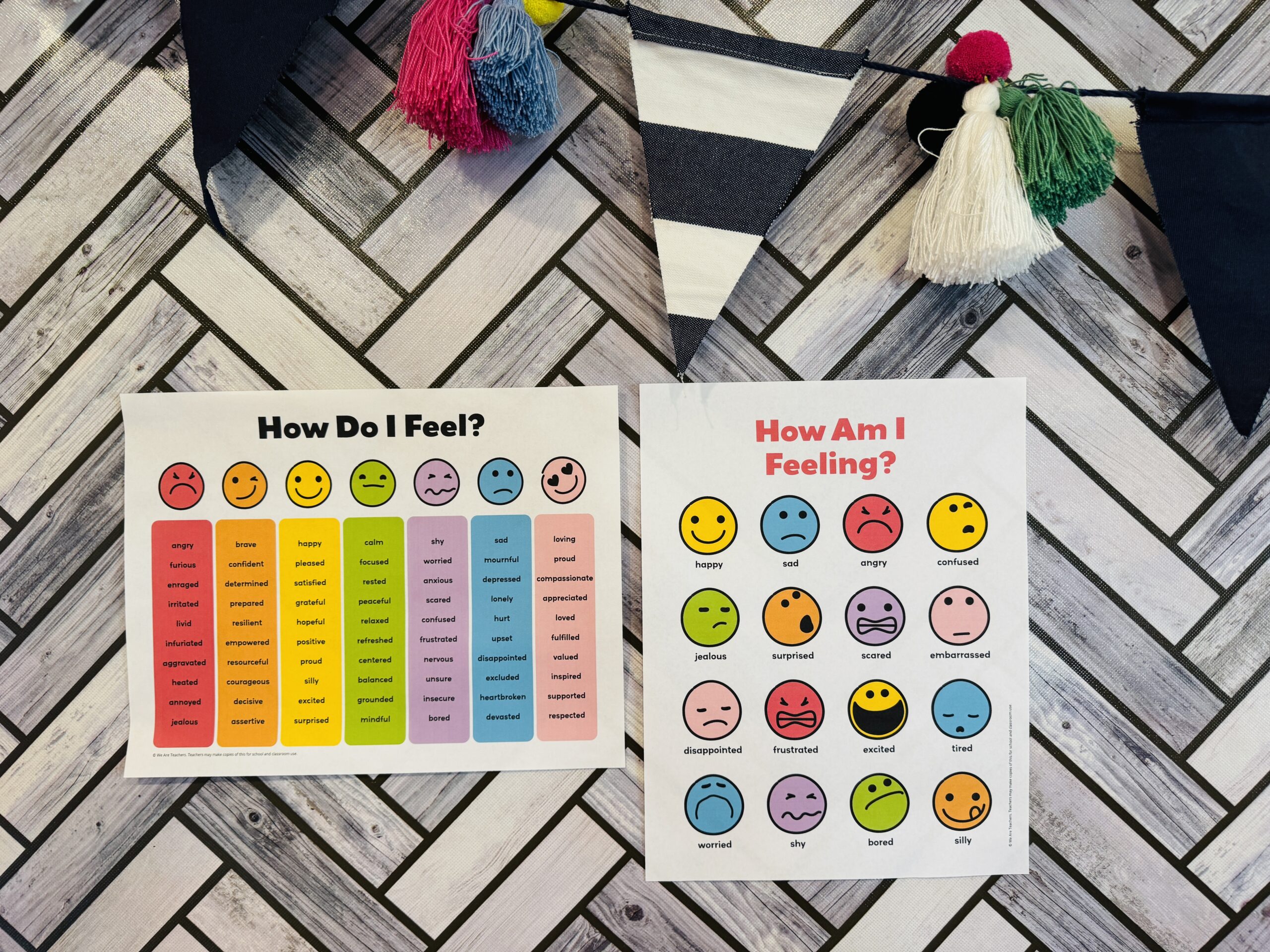
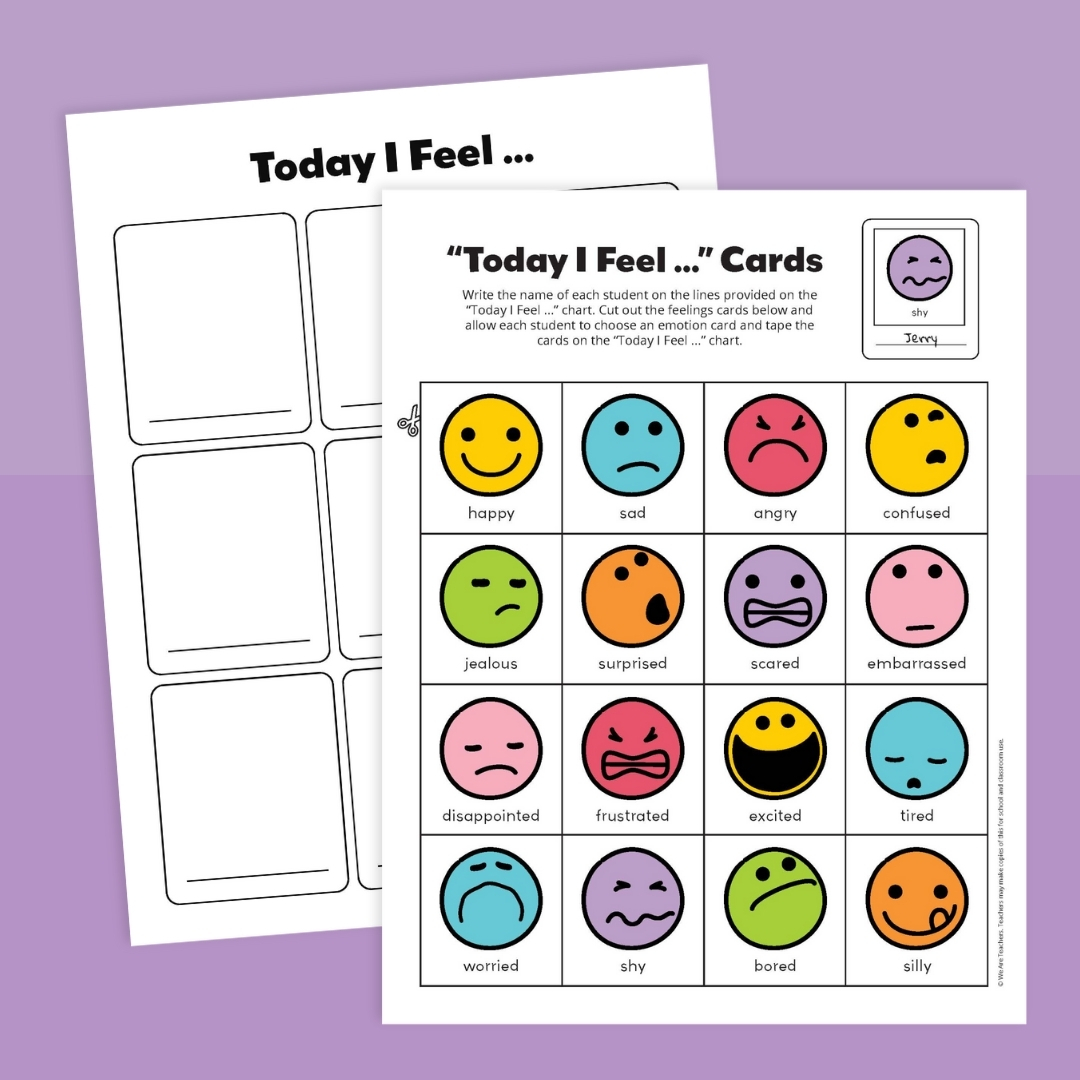
Implement a routine to help students name their feelings each day. Print out these “Today I Feel …” cards and emotions. Students can share their feelings during morning meeting or privately in their journals. The important thing is that they have time to think about and identify their feelings as part of the daily routine.
This bundle of printables has everything you need to teach all the feelings from angry to excited.
Journal in the zone
Ashleigh Lanzone, a special education teacher in Charlotte, North Carolina, uses the Zones of Regulation in her classroom by having students journal how they are feeling using the zone colors: red, yellow, blue, and green. Students can trace, write, color, or stamp the color they are feeling.
Do a zone scavenger hunt
School counselor and curriculum designer Rachel Davis likes to do a zone scavenger hunt. Students search the room for different coping strategies that correspond with the zone colors. For example, if they find “take deep breaths” written in red, they know this is a strategy they can use to cool down if in the red zone.
Talk through scenarios
Help students make the connection between feelings and problem-solving strategies by talking through various scenarios. Create a list of scenarios that are common for your grade level (e.g., a kid doesn’t want to share a toy, or a student isn’t pulling their weight on a project). Then, brainstorm how that scenario would make students feel and how they can address it. For younger students, a feelings flip chart can help provide scenarios and strategies.
Buy it: Feelings Flip Chart at Amazon
Build emotional toolboxes
What can students do to regulate their emotions when they veer away from the green zone? Create a toolbox of activities as you teach lessons on the Zones of Regulation. Keep the toolbox in your calm-down corner or somewhere else students can access it when they need the tools.
Use a feelings thermometer
Reinforce that feelings impact our body and can literally make us feel “hot” or “cool” with a thermometer reference.
Buy it: Thermometer Feelings Poster at Amazon
Role-play
Role-play is a great activity for helping students rehearse acceptable behaviors. Using task cards helps students build emotional self-control by rehearsing responses to different scenarios that may trigger strong emotions. Best for grades 4–7.
Inform families
It’s helpful when students use the same language about feelings at home and at school. Share the Zones of Regulation and how you’re teaching it through parent nights and information you send home.
Activities for Each Zone
Once students know the feelings and zones, it’s time to apply what they’ve learned. This can look a lot of different ways, but typically, when you notice a student who is upset or anxious, you can use that moment to coach them through identifying their zone and choosing a strategy that works to move them back toward green. Here are some go-to strategies to move kids from red, yellow, or blue to green.
Zones of Regulation Activities: Red
Getting kids from fire red to calm green often feels the most urgent. Use these activities to help kids move out of angry or panicked and into calm and content.
Deep breaths
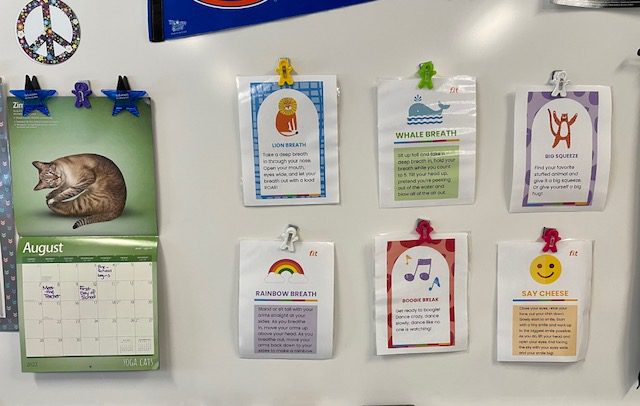
Teach students how to calm down from feeling giddy or high-energy by practicing animal breaths after an energizing activity. Then, they can breathe like a lion or whale when they’re calming down on their own.
Learn more: How To Use Transition Times for Mental and Emotional Health Check-Ins
Heavy work
“Heavy work” is the phrase for any task that requires students to use large muscles. Think: having a student move a box of books from one side of the room to another, or challenging students to see who can hold a plank longest.
Calm-down corner
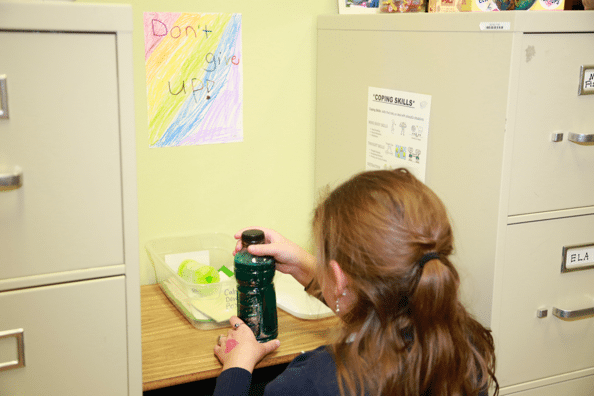
Provide students with a safe place to take a break when they need to regulate their emotions with a calm-down corner. Include resources for strategies that will help them manage their feelings and how to know when they’re back in green.
Learn more: How To Create a Calm-Down Corner in Any Learning Environment and Relaxing Music Videos for Calming Down Your Classroom
Zones of Regulation Activities: Yellow
Students who are feeling worried, giddy, or excited can also require some help to calm and center themselves.
Yoga and stretching

Yoga poses that ground students and help them focus on their breath shift feelings from jittery to calm.
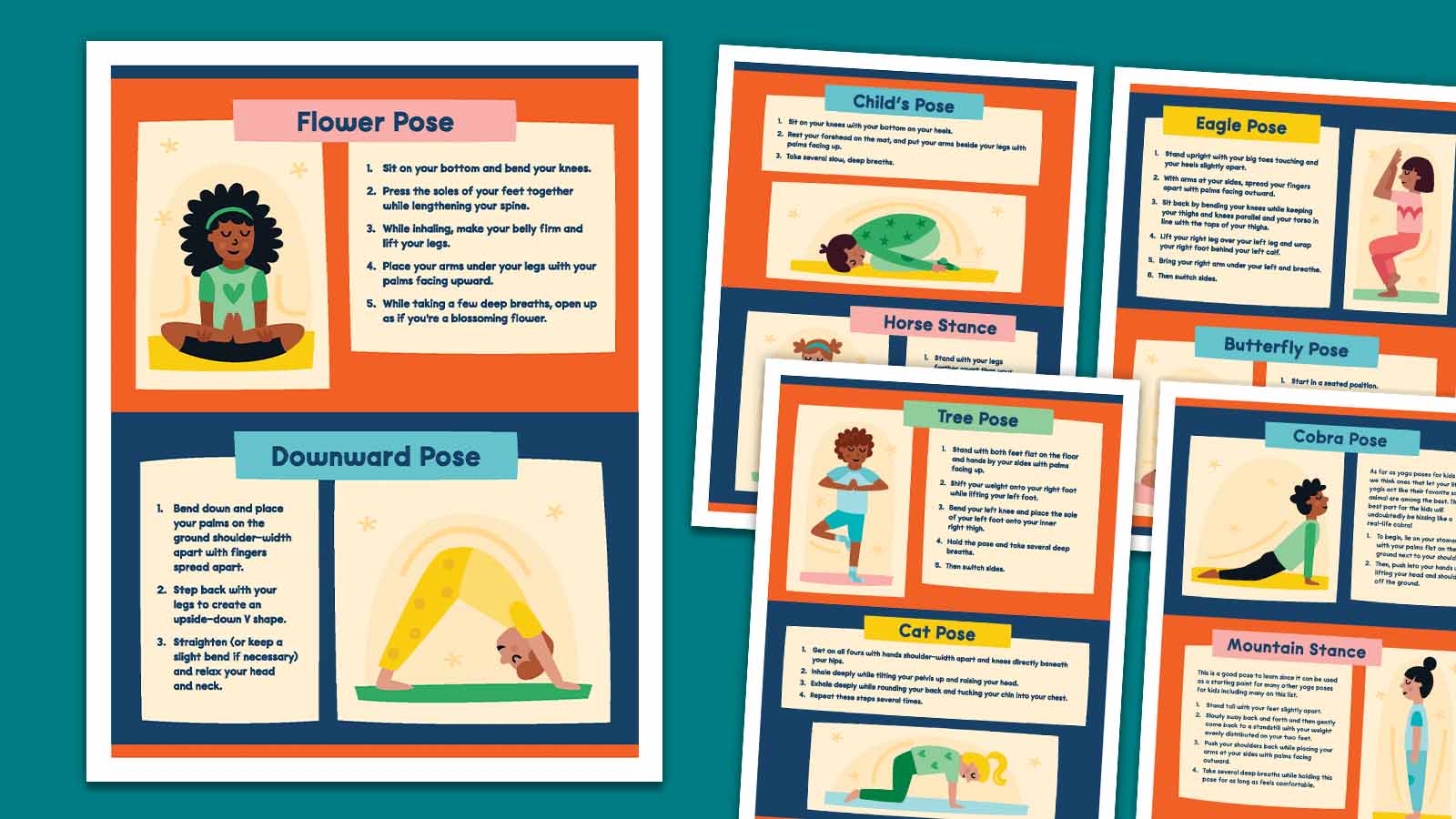
These yoga pose cards are perfect to print and post in a calming corner or near a mat students can use to calm down.
Self-control bubbles
This is a really fun activity to talk about self-control with kids, and it’s harder than it seems! Label a special bottle of bubbles “Self-Control Bubbles.” Gather kids in a circle. For the first round, blow bubbles and allow students to pop, touch, chase, and catch the bubbles to their heart’s desire (within control). However, for the second round, tell the students that they are going to practice using self-control. Bubbles will be all around them, but the students must use their self-control strategies and not touch or chase the bubbles. Afterward, talk with kids about how it felt and how they managed to control their impulses.
Buy it: 12-Pack of Bubbles at Amazon
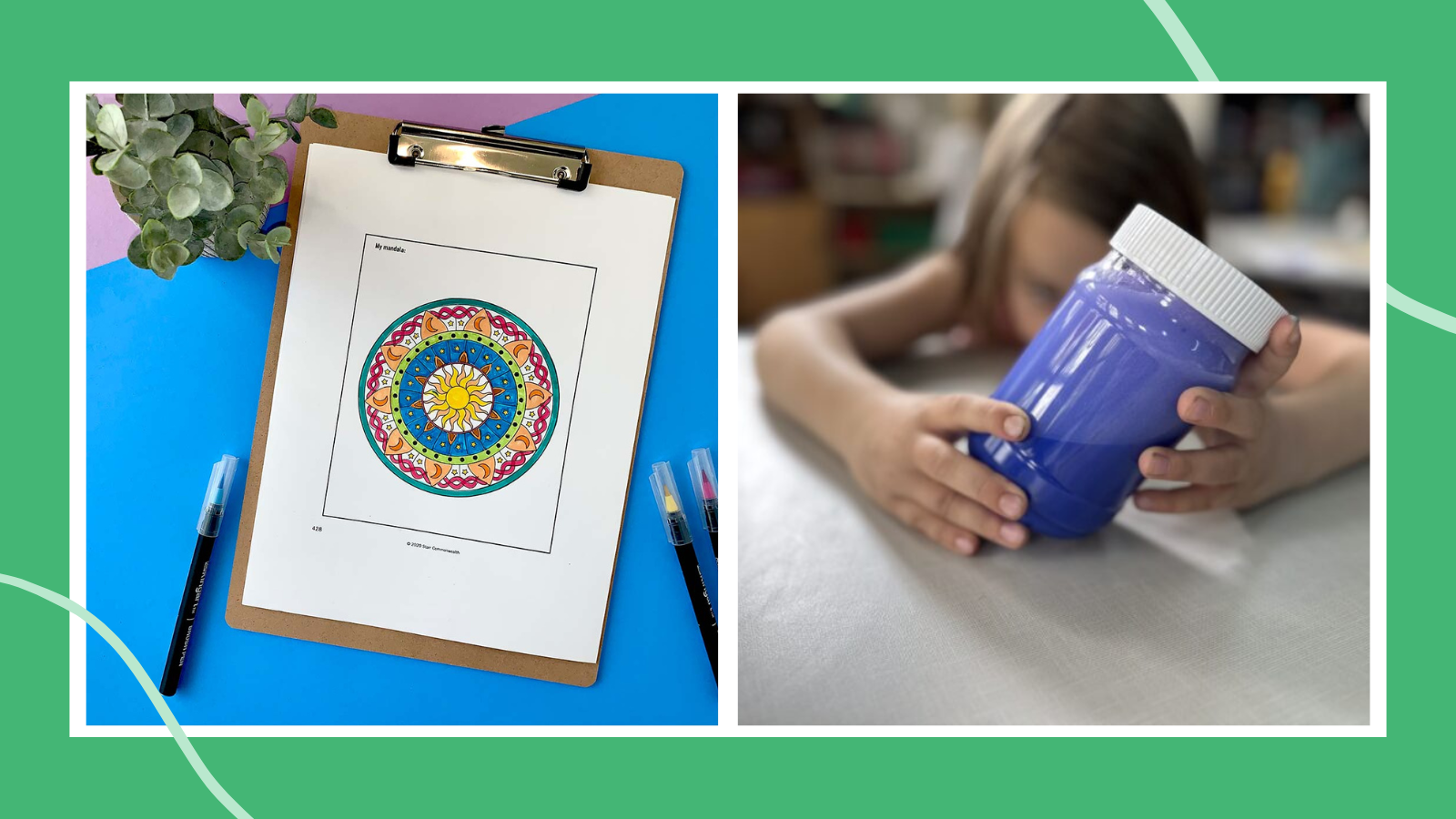
Calm-down jar
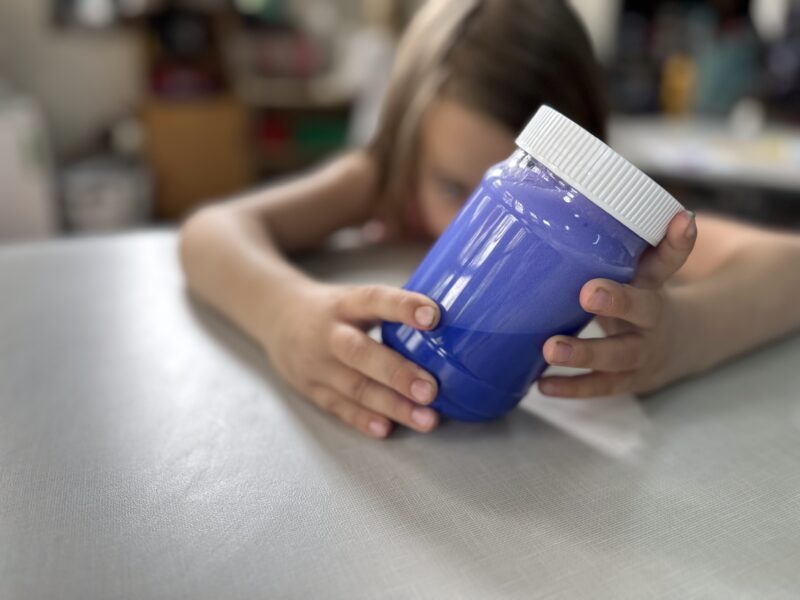
Make calm-down jars to mesmerize students. For students who really like this calm-down strategy, keep the jars you make in your calm-down corner.
Learn more: DIY Calm-Down Jars
Zones of Regulation Activities: Blue
Use these activities when students are feeling sad, bored, or, well, blue.
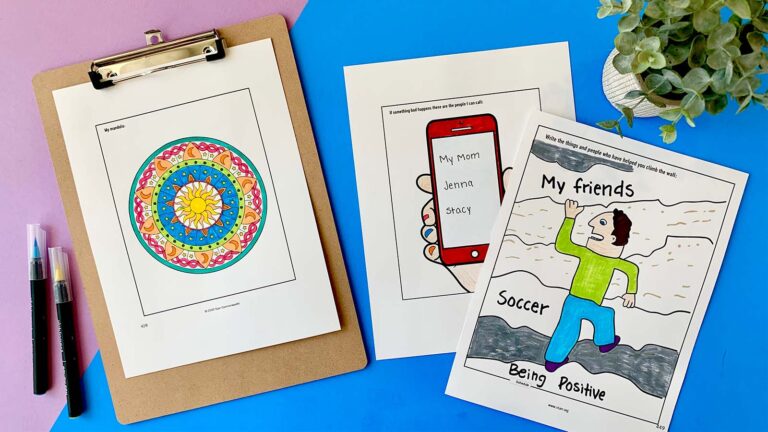
Mindful coloring
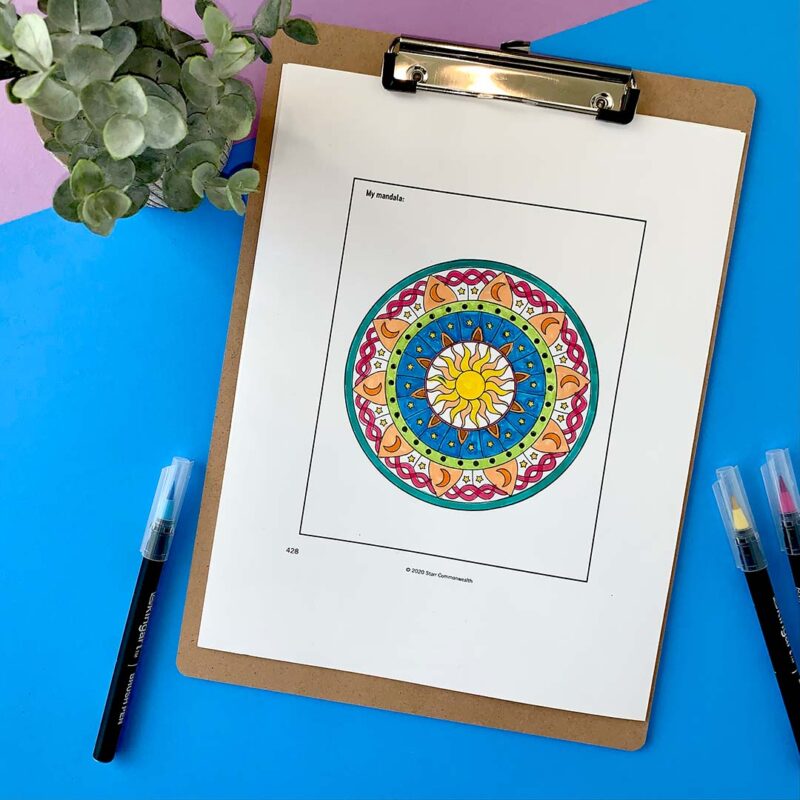
Mindful coloring is one of those activities that can be adapted for any grade level or interest, and it helps kids get from red to green consistently. Incorporate mindful coloring during transitions or downtime, and make it available in your calm-down corner.
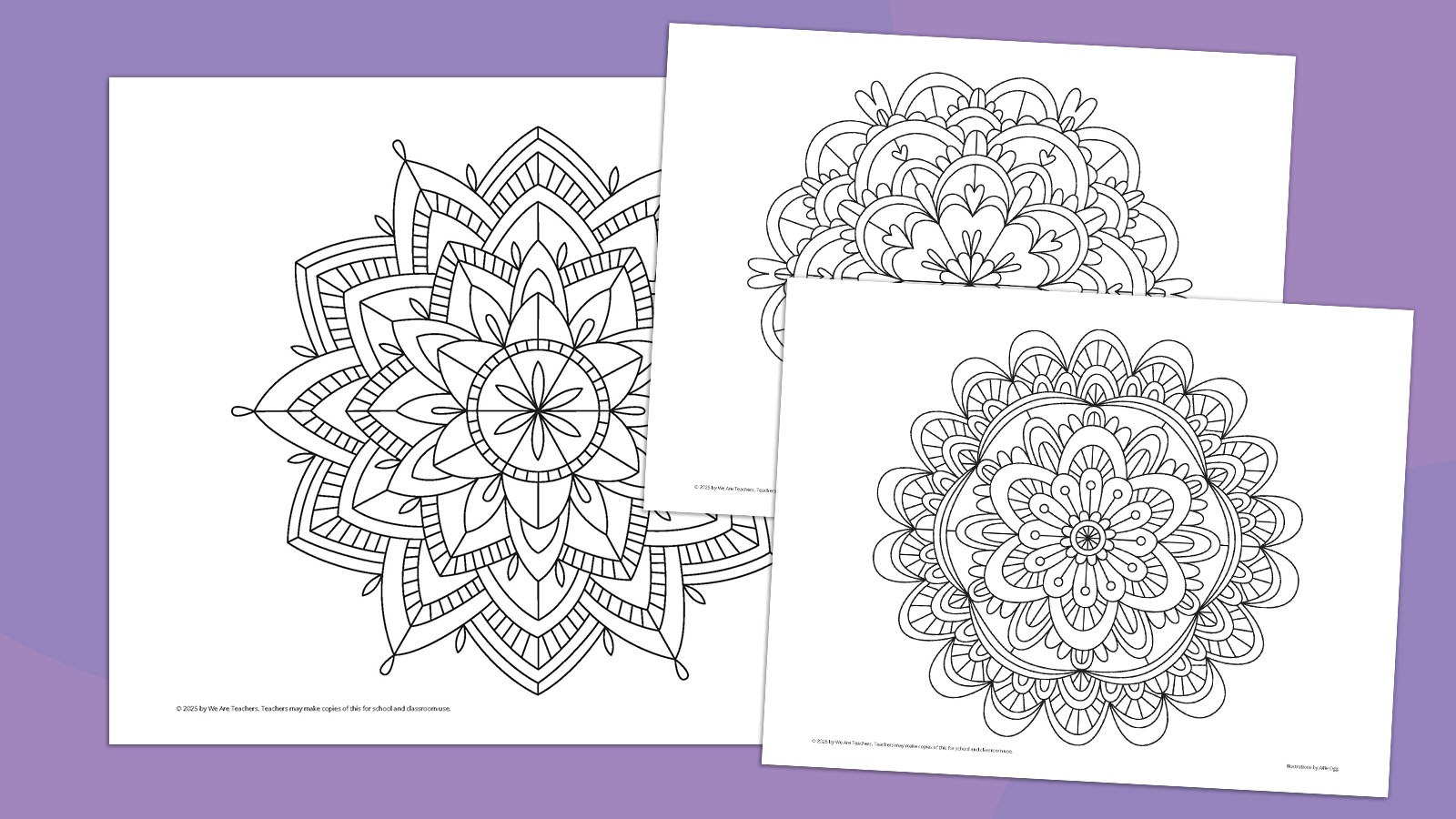
Mindfulness Coloring Pages (Free Printable)
Print mandala coloring pages for older students who need to color to calm down.
Puzzles
Puzzles, including jigsaw puzzles and word searches, are a way to engage the brain in thinking, which can lift kids out of the blue zone.
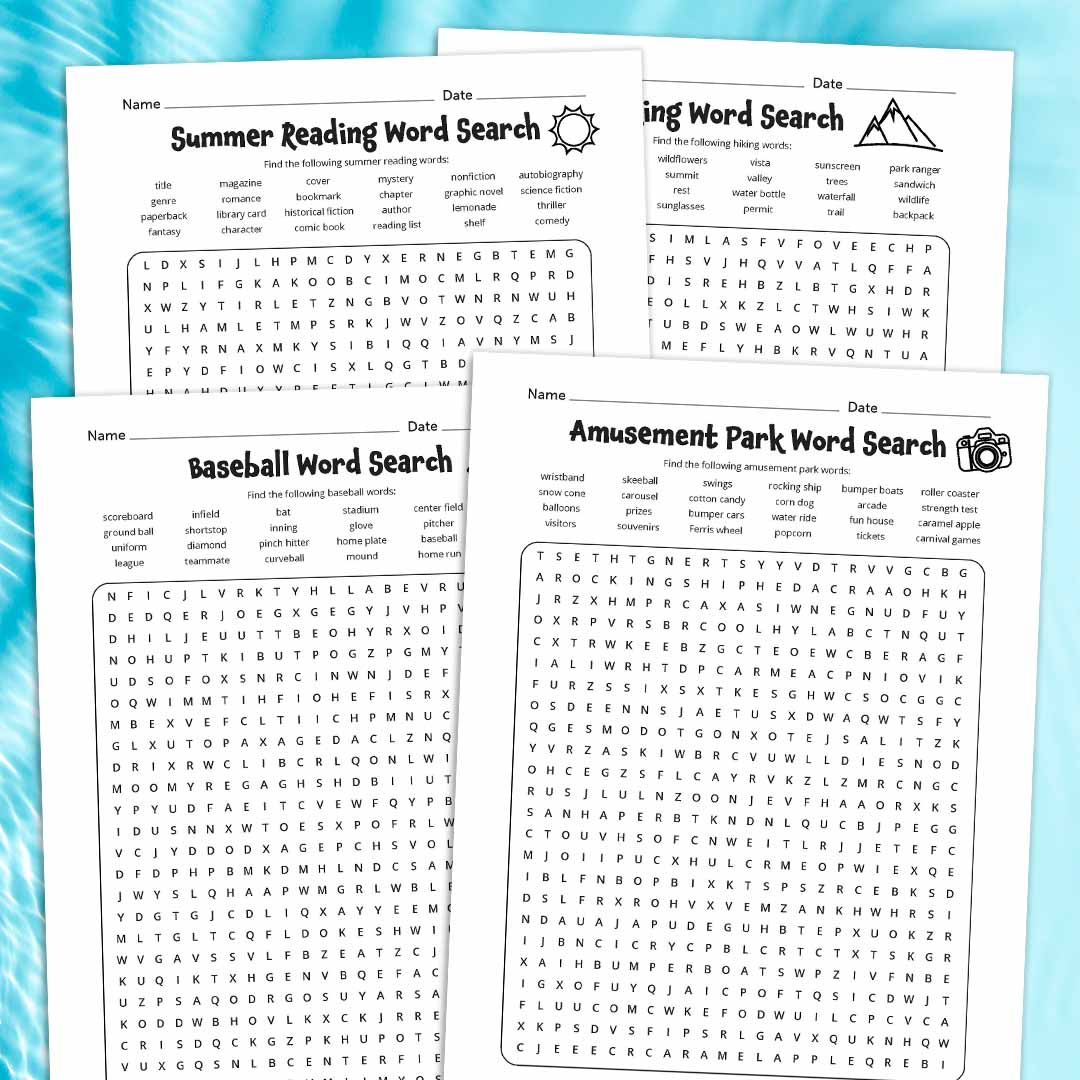
Word Search Puzzles (Free Printables)
Word search puzzles are the perfect way to get kids’ brains going again. Just follow the link to get your free printable word searches.
Gratitude notes
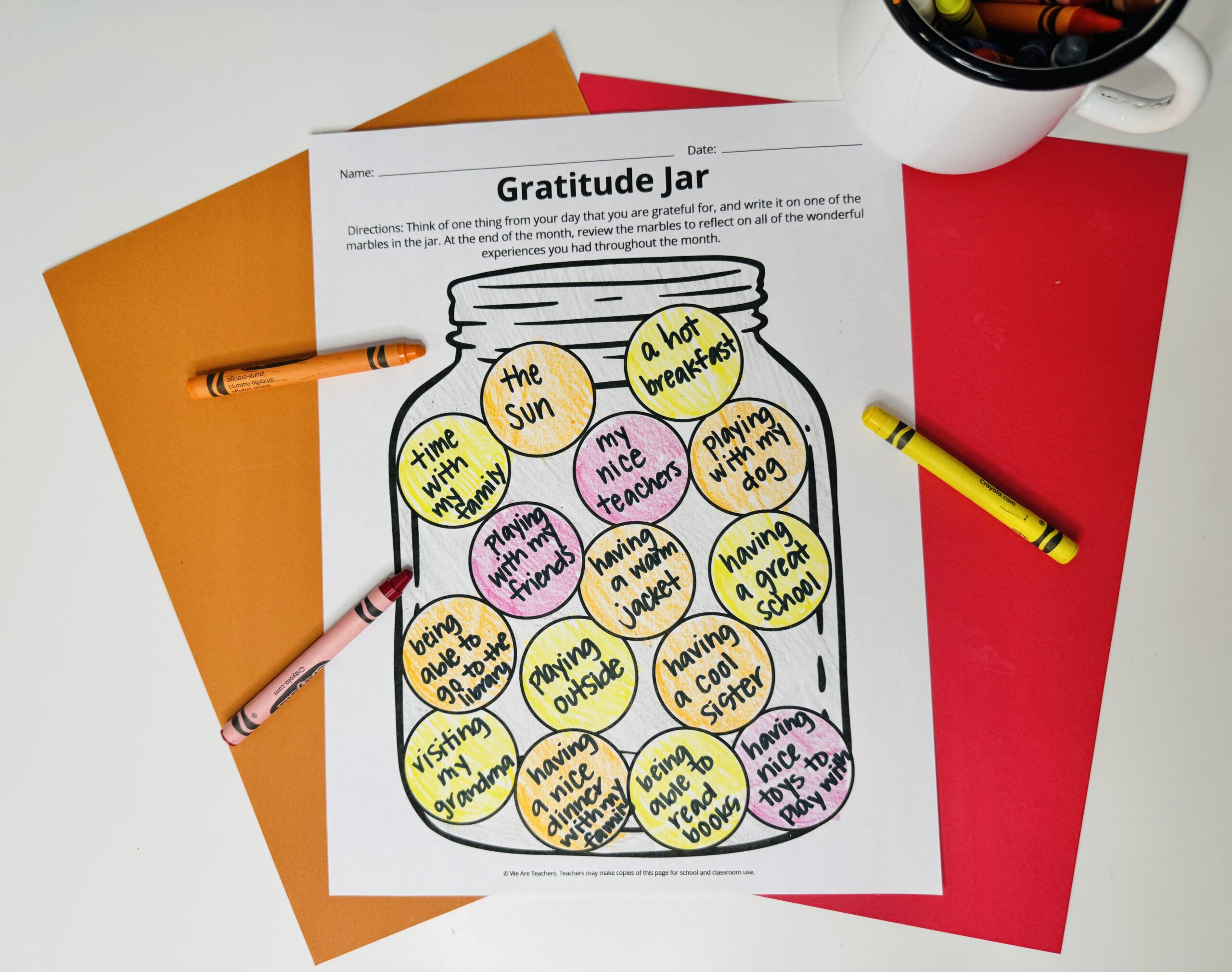
Gratitude isn’t just for November. Thinking about what we’re thankful for is a strategy to help students when they’re in the blue zone and need a reminder of the positive things in their day.
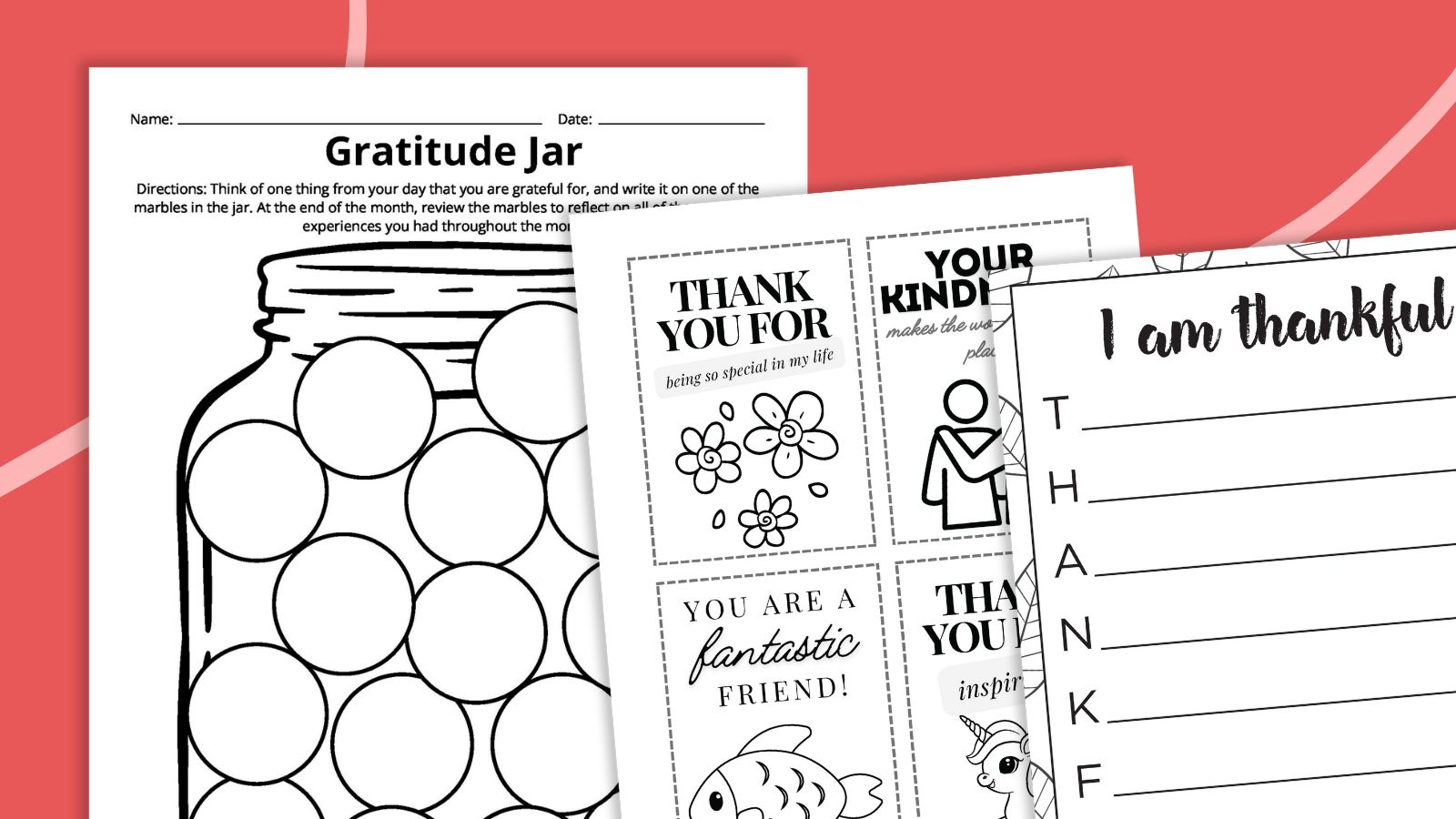
Gratitude Worksheets (Free Printables)
This pack of worksheets helps students think about all the things they’re grateful for, which is helpful in every month of the year.